
APFC Panel Selection Guide & Power Factor Optimization
A guide for plant managers and electrical engineers on sizing capacitor banks, selecting APFC controllers, and understanding how low power factor affects utility billing.
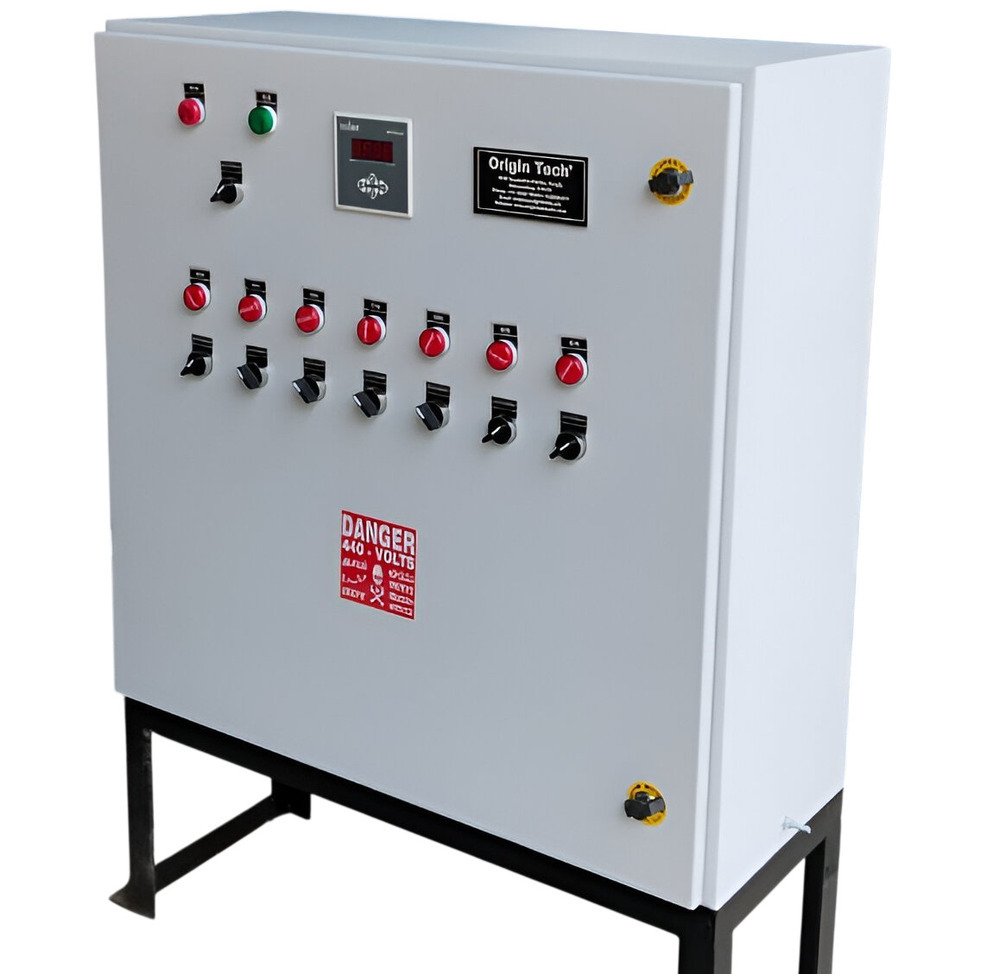
Why Power Factor Matters in Industrial Utilities
In AC power distribution, inductive loads such as electric motors, transformers, welding sets, and fluorescent lighting draw reactive power (kVAr) alongside active working power (kW). This creates a phase lag between voltage and current waveforms, lowering the overall system Power Factor (PF).
Low power factor can increase current for a given active-power demand and may affect losses, voltage drop and utility billing. Penalties, incentives and target power factor vary by the applicable electricity tariff and supply agreement; verify the current rules for the facility before estimating financial impact.
How an APFC Panel Works
An Automatic Power Factor Correction (APFC) Panel continuously senses line voltage and load current via Current Transformers (CT). The intelligent APFC micro-processor controller calculates the reactive power demand and automatically switches steps of heavy-duty capacitor banks in or out of the circuit using specialized duty contactors or thyristor switches.
Key Components of a Quality APFC Panel
When procuring an APFC panel, ensure it contains high-grade components built to withstand voltage surges and harmonic distortion:
- Microprocessor APFC Controller: Reads active/reactive power and maintains target setpoints.
- Heavy-Duty MPP Capacitors: Metalized Polypropylene (MPP) self-healing capacitors rated for 440V / 480V/ 525V to handle over-voltages.
- Detuned Harmonic Reactors: Reactor selection requires harmonic measurements and a project-specific study. Do not choose a detuning factor without checking the network and capacitor manufacturer’s documentation.
- Switchgear & Protection: Incomer MCCB protection from Schneider, ABB, or Siemens, along with HRC fuses or MCBs for step isolation.
- Real-Time Power Quality Monitoring: Pre-integrated with Tor Titan smart energy meters for cloud logging.
Calculating Required kVAr Rating
The required capacitor bank rating (kVAr) can be calculated using the standard formula:
Required kVAr = Peak kW × [ tan(cos⁻¹(Initial PF)) − tan(cos⁻¹(Target PF)) ]
The formula is an initial calculation only. A qualified electrical engineer must verify measured demand, load variation, harmonics, transformer conditions, switching steps, utility requirements and applicable standards before selecting equipment.
Order Custom APFC Panels From SS Exim
SS Exim provides custom electrical panel quotations from its registered location in Thane and serves Mumbai, Pune and Bangalore subject to project scope. Ratings, switching method, reactors, protection, testing and installation must be defined in the approved specification.
References
- IEC 60831-1:2014 — Self-healing shunt power capacitors for systems up to 1,000 V
- IEC 61439-1:2020 — Low-voltage switchgear and controlgear assemblies, general rules
Use the editions and Indian adoptions applicable to the project. These references do not claim compliance by a particular panel.
Engineering limitation and safety notice: This article is general educational guidance. It is not a design, a specification, a quotation or an approval, and it does not establish compliance with any standard for a particular product or installation. Ratings, fault duty, protective settings, coordination and final equipment selection must be confirmed by a qualified electrical engineer against site measurements, current manufacturer documentation and the applicable statutory requirements. Work on electrical equipment must only be carried out by competent persons using the required isolation and personal protective measures.
Request a Project-specific APFC Assessment
Provide the electricity bill, measured load profile, single-line diagram and harmonic information for scope review. Any sizing or payback estimate requires verified inputs and stated assumptions.
Request APFC Quote